Listicles, comparison pages, how-to guides and community content (Reddit threads and YouTube videos) are cited most often by AI engines like Perplexity and Google AI Overviews. Published studies differ on exact shares, and the mix shifts by engine, by industry and by the type of question asked, so the useful answer is a pattern, not a single number: AI engines cite pages that resolve the question directly, in a format they can lift cleanly.
This article explains which formats win, why the answer changes by question type, how Perplexity and AI Overviews differ, and how to find out what is cited for your prompts rather than relying on averages.
What kind of content do AI engines cite most often?
The formats that earn citations most consistently are ranked lists, head-to-head comparisons, step-by-step guides, definitional explainers, and discussion or video content from Reddit and YouTube. Several large citation studies report that list-style ("best X for Y") pages make up the biggest single share of cited pages, with comparison pages trailing well behind. We won't quote exact percentages here because they depend on each study's prompt set and methodology, and they move over time.
What the formats share matters more than the ranking:
- A self-contained answer near the top. The engine can quote one paragraph and be done.
- Clear structure. Question-style headings, short sections, tables and lists make extraction easy.
- Specific, checkable facts. Prices, features, limits and dates give a model something concrete to repeat.
- A visible author or brand. Pages that state who is speaking and what they sell are easier to attribute.
Why the question decides the format

The type of question someone asks largely determines which kind of page gets cited. Buying questions pull in listicles and comparisons. "How do I" questions pull in guides and video. "What is" questions pull in definitions and reference pages. Opinion or experience questions pull in forums.
That means asking "which format is best?" in the abstract is the wrong frame. Ask instead: what are the ten questions my buyers type, and what format does each one attract? A page type that dominates a study's overall numbers may barely appear for your category's prompts.
| Question type | Formats usually cited | What to publish |
|---|---|---|
| "Best X for Y" | Listicles, review roundups | Honest ranked list with criteria and your own pricing facts |
| "X vs Y" | Comparison pages | Side-by-side table, clear verdict per use case |
| "How do I..." | Guides, YouTube tutorials | Numbered steps, screenshots, a short video |
| "What is..." | Definitions, reference pages | Direct one-paragraph answer, then depth |
| "Is X worth it / any experiences?" | Reddit threads, reviews | Real participation, customer proof |
| "How much does X cost?" | Pricing pages, cost guides | Plain price ranges and what drives them |
How do Perplexity and Google AI Overviews differ?
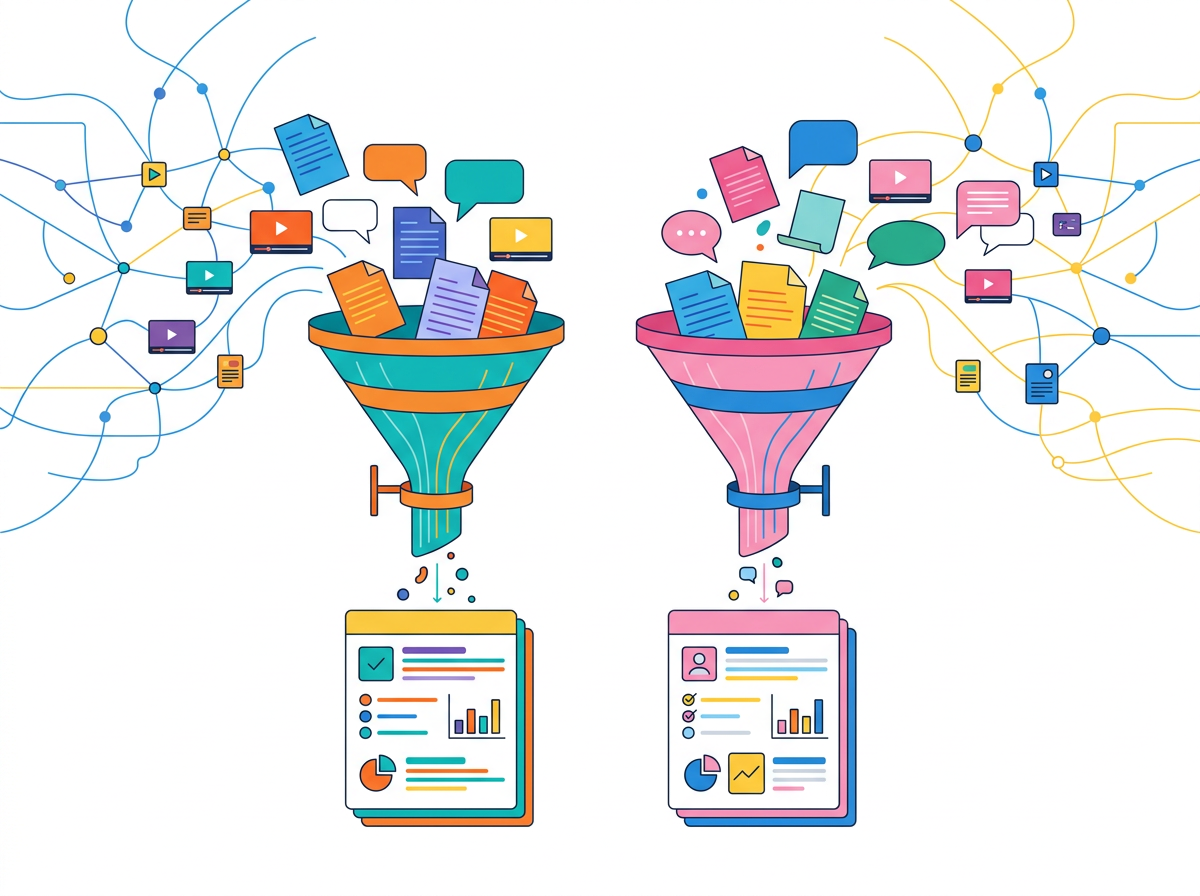
Perplexity and Google AI Overviews cite different mixes of sources, so one content strategy rarely fits both. Perplexity shows its sources prominently and tends to pull from a wide set of web pages, including publisher articles, product pages and discussion threads, often with fresh content. Google AI Overviews draw heavily on pages already in Google's index and have been reported to lean on community and video sources such as Reddit and YouTube for many queries.
Two practical consequences follow:
- Google rankings do not reliably predict AI mentions. Ranking well helps you get seen, but engines assemble answers from their own retrieval mix, and a page on position eight can be cited while position one is ignored.
- Each engine behaves differently on the same prompt. Claude, ChatGPT, Gemini and Perplexity can name different brands and cite different pages for one question, so test on every engine your buyers use.
Do brands or independent publishers get cited more?
Both get cited, and brand-owned pages are a substantial share, especially for listicles and comparisons. Some studies find a large portion of cited list pages are published by the brands themselves, and that many cited reviewers disclose affiliate or commission relationships. Treat these as directional findings. The takeaway is not that self-promotion works by default: a brand's own "best tools" page gets cited when it is specific, fair about alternatives and backed by facts a model can verify.
If you publish your own roundup, include competitors honestly, state your criteria, and say where your product is not the best fit. Pages that read as sales copy are less quotable and less trustworthy.
What makes a page quotable rather than just crawlable?
A quotable page opens each section with a standalone answer, uses plain language, and supports claims with specifics. Engines extract passages, not whole pages, so every H2 should work if read alone.
A checklist you can apply to any page:
- Put the direct answer in the first one or two sentences under the heading.
- Phrase at least some headings as the questions people ask.
- Use tables when options are being weighed against each other.
- State concrete facts: prices, limits, dates, supported platforms.
- Add an FAQ that covers the natural follow-up questions.
- Keep pages current; refresh outdated figures rather than publishing duplicates.
For a deeper walkthrough, see how to structure content so AI assistants cite it, and for the wider discipline, the practical guide to generative engine optimization.
Where do Reddit and YouTube fit in?
Reddit threads and YouTube videos are among the most frequently cited sources for some engines, particularly Google's AI features, because they hold first-hand experience and step-by-step demonstration. You cannot simply post promotional content there and expect citations; communities punish that. Earning a place means answering real questions, disclosing affiliation and producing genuinely useful videos. We cover this in Reddit and YouTube in AI answers: how to earn a place honestly.
How do you find out what gets cited in your category?

The most reliable method is to measure it directly. Averages from large studies describe the whole web; your niche may look very different. A workable process:
- List your buyers' real questions, including buying, comparison, how-to and cost prompts.
- Run them on each engine and record which domains, pages, threads and videos are cited.
- Classify the citations by format and publisher type, so you see whether lists, forums, vendors or video dominate.
- Track over time. Answers vary between runs, so look at trends, not one snapshot. See whether AI answer tracking scores are accurate for how to read variance.
- Close the gaps: publish the format that is being cited where you are absent, or take part where the cited conversation already happens.
This is the workflow Citeflare is built around. Citation analysis collects and classifies the domains, Reddit threads and YouTube videos shaping answers, and prompt tracking runs your questions daily across engines including ChatGPT, Gemini, Perplexity, Google AI Overviews and Google AI Mode. If you want a manual start, a spreadsheet and a few dozen prompts will already teach you a lot; the tooling mainly saves time and adds history. For measurement basics, read how to measure your visibility in AI answers.
What should you publish first?
Start with the format your own prompts show being cited. If you have no data yet, a sensible order is:
- A clear pricing or cost page, since cost questions are common and concrete.
- One honest comparison page for your closest alternative.
- A "best for" roundup with transparent criteria for your category.
- Step-by-step guides for your top how-to questions.
- Participation in the communities and video channels your buyers already use.
Refresh these regularly. Stale facts are one of the easiest ways to lose a citation. Also confirm AI crawlers can reach the pages; AI crawlers explained shows which bots to look for in your logs.
FAQ
What content type is cited most by AI engines?
List-style pages ("best X") appear to be the most cited format in several large studies, followed by comparison pages, guides and community content. Exact shares vary by study and engine, so verify against your own prompts.
Does ranking on Google mean I will be cited in AI Overviews?
Not reliably. Ranking helps visibility, but AI answers pull from their own retrieval mix and cite pages that answer the question cleanly, sometimes ones that rank lower.
Is Perplexity different from Google AI Overviews for citations?
Yes. They draw on different source mixes and weigh formats differently, and Google's features have been reported to lean on Reddit and YouTube heavily. Test each engine separately.
Should I publish my own listicle?
If it is honest, specific and includes real alternatives, yes. Pure self-promotion is less quotable and less credible.
How often should I update pages to keep citations?
Whenever facts change, such as pricing, features or dates, and on a regular review cycle. Updating an existing page beats publishing a near-duplicate.
Can I track which of my pages get cited?
Yes. Run your buyers' questions across engines, record the cited sources and watch the trend over weeks. Tools like Citeflare automate this, but a manual log works to begin with.