A small B2B software company should expect to pay roughly $40 to $150 a month for AI search monitoring that covers one product, a few dozen to a few hundred tracked prompts and the main engines. Entry tools sit at the low end, team-level platforms with all engines, publishing and crawler data sit in the middle, and enterprise suites are quoted individually. Prices change often, so check each vendor's page before you commit.
This guide focuses on what actually moves the price for a software company, and how to decide how much you need to buy. For a SaaS-specific breakdown of plan fit, see our piece on AI visibility tracking cost for small B2B SaaS teams; here we look at the pricing mechanics and the budget around the tool.
How much does an AI search monitoring tool cost for a small B2B software company?
For a small B2B software company, a realistic budget is a low three-figure monthly amount at most. A useful way to think about it is in three bands:
| Band | Typical monthly range | What you usually get | Best for |
|---|---|---|---|
| Entry | Under about $50 | One brand, around 50 prompts, a subset of engines | Getting a first baseline |
| Team | About $100 to $150 | Several projects, a few hundred prompts, most or all engines, often content or crawler features | A marketing team acting on the data |
| Enterprise or agency | Several hundred dollars and up, or custom quotes | Many brands, high prompt volumes, support, integrations | Agencies and larger companies |
These bands are a rough guide drawn from how the category is packaged, not a survey of every vendor. Some established SEO suites add AI tracking as a paid add-on on top of an existing subscription, and some specialist tools quote only after a sales call. Always compare on the same unit: prompts, engines and projects.
What drives the price of AI search monitoring?
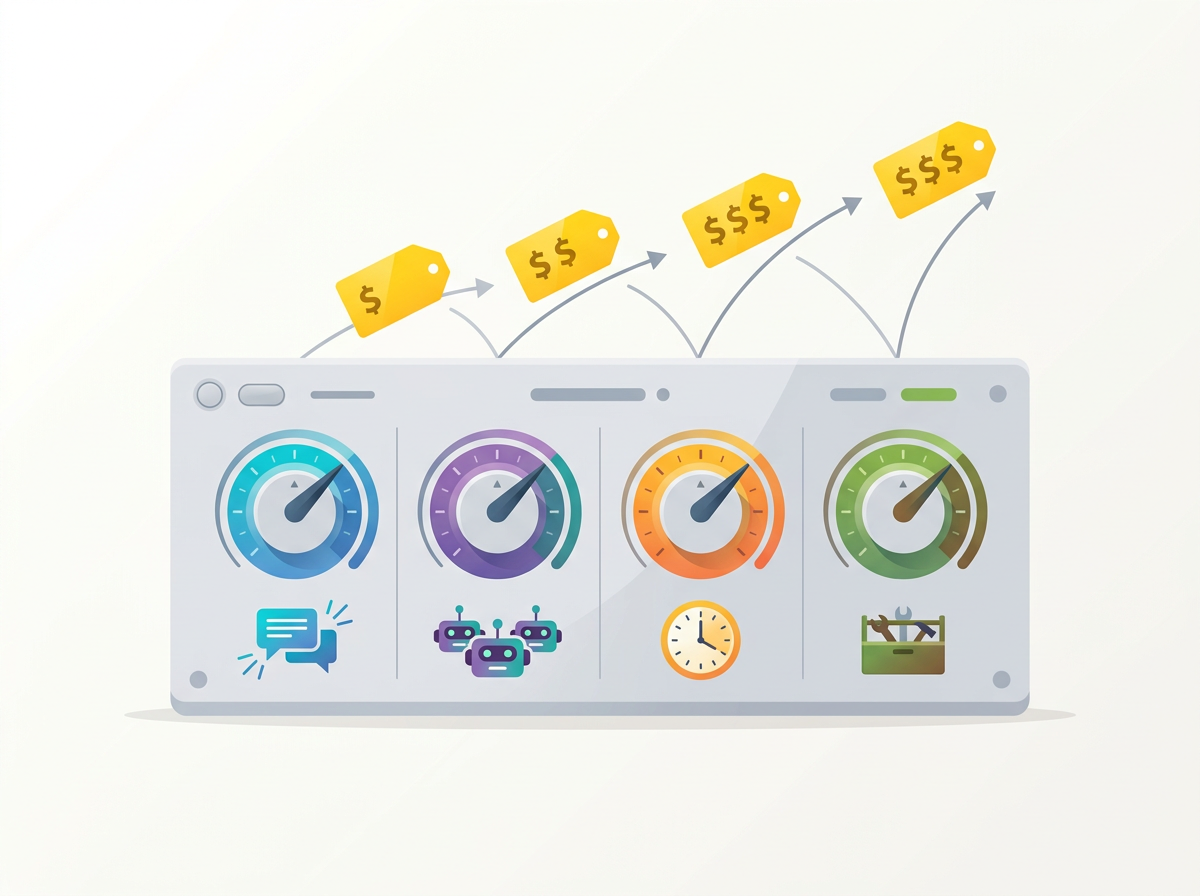
Four variables explain most of the difference between a cheap plan and an expensive one.
Number of tracked prompts
A prompt is a question a buyer might ask, such as "best invoicing software for agencies." Each one is run on a schedule and costs the vendor money to query. More prompts means a higher tier. Some vendors count a prompt once per country, so tracking the same question in three markets triples the count. Citeflare, for instance, counts one question from one country as one prompt.
Number of AI engines
ChatGPT, Gemini, Perplexity, Google AI Overviews and Google AI Mode are the usual core. Claude, Grok, DeepSeek, Mistral and Llama are often extras or tracked less often. If your buyers are technical, you may want wider coverage than a consumer brand would.
Refresh frequency
Answers vary between runs, so a single snapshot misleads. Daily runs cost more than weekly ones, but they give you a trend line instead of noise. Our article on whether AI answer tracking scores are accurate explains why frequency matters.
Features beyond tracking
Citation analysis, competitor share of voice, crawler logs and content publishing are sometimes bundled and sometimes sold separately. A cheap tracker that needs two other subscriptions can cost more than an all-in-one plan.
How many prompts does a small software company actually need?
Most small software companies need between 30 and 150 prompts to start. Build them around the questions your buyers ask rather than around keywords:
- Category questions: "what is the best [category] software for [segment]?"
- Comparison questions: "[your product] vs [competitor]."
- Problem questions: "how do I [job your product does]?"
- Integration and use-case questions: "CRM that works with [tool]."
If you sell into two segments or two countries, the count grows fast. Start with the questions closest to purchase, then expand once you see where you appear. This is why a plan with 50 prompts often suffices for a first quarter, while a growing team may want a few hundred.
What does Citeflare cost, as one worked example?
Citiflare's published pricing is a useful reference point because it shows how the variables above translate into tiers. The figures below are from the Citeflare pricing page, where monthly billing is shown and annual billing saves about 20%.
| Plan | Monthly price | Projects | Tracked prompts | Engines | Articles a month |
|---|---|---|---|---|---|
| Starter | $49 | 1 | 50 | 3 of the 5 core engines daily, plus Claude weekly | 10 |
| Growth | $119 | 3 | 120 | All 10 engines (9 daily, Claude weekly) | 30 |
| Agency | $599 | 10 | 300 | All 10 engines | 100 |
| Enterprise | Contact us | More | Higher | Tailored | Tailored |
Growth also adds crawler analytics, content autopilot and publishing to WordPress and other CMSs, which Starter does not include. Every plan begins with a 7-day free trial with no card required, there are no contracts, and you can change plans at any time.
For a small B2B software company with one product, Starter is a sensible baseline. If you have several products, want to see which AI bots crawl your docs, or plan to publish content from the gaps you find, Growth is the more likely fit.
What costs are not on the pricing page?
The subscription is usually the smaller part of the real cost. Plan for these:
- Time to set up. Choosing prompts and competitors takes a few hours. Some tools take about ten minutes to configure, but good prompt selection still deserves thought.
- Content production. Monitoring shows gaps; closing them needs articles, comparison pages and documentation. Tools with built-in drafting reduce, but do not remove, editing time.
- Technical work. Crawler analytics needs a small snippet on your CDN or server, such as a Cloudflare Worker or middleware. Our explainer on AI crawlers like GPTBot and ClaudeBot shows what to look for.
- Add-on and overage charges. Check whether extra prompts, extra engines or extra seats are billed separately.
- Annual lock-in. Discounts for annual billing are real, but test monthly first if you are unsure.
Is a cheap or free tool enough?
A cheap tool is enough if your goal is a baseline: are we named at all, and which competitors are? It stops being enough when you need to act on the data. Ask whether the tool shows which domains, Reddit threads and YouTube videos shape answers, because that tells you where to publish or earn mentions. Our guide to citation analysis covers that layer. Also ask whether it tracks competitors, since share of voice only makes sense against a defined set; see AI share of voice tools.
Manual spot checks in ChatGPT or Perplexity cost nothing, but they are hard to repeat consistently and give you snapshots rather than trends.
How do you compare vendors fairly?
Use the same checklist on every quote:
- Cost per tracked prompt, counting how each vendor defines a prompt.
- Engines included and how often each is queried.
- Whether competitor tracking and citation analysis are included.
- Whether crawler analytics and content publishing are included or extra.
- Contract terms, trial length and cancellation rules.
- Whether data comes from real API answers and how variance is handled.
For a feature-level comparison of named tools, read our roundups of tools that track brand mentions across ChatGPT, Claude and Gemini and alternatives to Scrunch AI.
How should you budget the first quarter?

A simple approach is to start small and let the data justify an upgrade:
- Month one: Use a free trial, then the entry plan. Track 30 to 50 buyer questions and three to five competitors.
- Month two: Review citations and gaps. Pick the three biggest gaps and publish content for them.
- Month three: Compare the trend in your visibility score. If it moves and you need more prompts, engines or projects, upgrade.
Treat any single week's score cautiously, since answers vary between runs. Trends over several weeks are what matter. For how to read those numbers, see how to measure your visibility in AI answers.
FAQ
How much does AI search monitoring cost per month for a small business?
Expect roughly $40 to $150 a month for a small software company, depending on prompts, engines and features. Enterprise and agency tiers cost more, and some vendors only give custom quotes.
Is there a free AI search monitoring tool?
Some tools offer free trials rather than free plans. Citeflare gives a 7-day free trial with no card required. Manual checks in AI assistants are free but not repeatable at scale.
Does annual billing save money?
Often. Citeflare's annual billing takes about 20% off the monthly price on every plan. Test monthly first if you are unsure the tool fits.
How many prompts do I need to track?
Most small B2B software companies can begin with 30 to 150 prompts covering category, comparison, problem and integration questions, then expand as they learn where they appear.
Do I need to track every AI engine?
Not at first. Start with the engines your buyers use most, usually ChatGPT, Gemini, Perplexity and Google AI Overviews, and add others as your budget allows.
Can I change plans later?
With Citeflare, yes. Upgrades start straight away with the prorated difference, and downgrades apply from your next renewal. Check the policy of any other vendor before you sign.