To improve your brand's visibility in AI-generated answers, run a repeating loop: list the questions your buyers ask, check which engines name you, find the sources those answers rely on, close the gaps with clear, citable content and third-party presence, confirm AI crawlers can read your site, then track the trend over weeks. No single tweak does it. Visibility comes from being the easiest brand for a model to describe and verify.
Most guides give you a list of tactics. This one gives you the order to do them in, and the reason for each step, so you spend effort where answers are actually being decided.
What does "visibility in AI answers" actually mean?
AI answer visibility is how often and how favourably AI assistants mention your brand when people ask questions about your category. It has two parts: whether you are named at all, and how you are described when you are (position, sentiment, and which sources back the claim).
That is different from a Google ranking. Ranking well in classic search does not predict being mentioned by an assistant, because assistants assemble answers from many sources, including forums, videos, review sites and your own pages. For the background on how those choices are made, see how AI assistants decide which brands to recommend.
Step 1: Start with the questions, not the keywords
Begin by writing down the real questions buyers ask an assistant, because visibility only exists relative to a question. A brand is not "visible" in general; it is visible for "best invoicing tool for freelancers" and invisible for "how do I automate recurring invoices."
Build a list of 25 to 50 prompts across these types:
- Category discovery: "What are the best [category] tools?"
- Comparison: "[You] vs [competitor], which is better for [use case]?"
- Problem-led: "How do I fix [problem you solve]?"
- Constraint-led: "Best [category] for small teams / in Germany / under a budget."
Phrase them the way a person would talk, not the way you would type into a search box. Prompt tracking tools such as Citeflare's prompt tracking run these daily across engines, but you can start by pasting them into each assistant by hand and logging the result.
Step 2: How do I find out where my brand is missing?
Run each prompt on several engines and record three things: were you named, where in the answer, and who was named instead. Do it more than once, because answers vary between runs. A single snapshot misleads; a trend over weeks does not. If the variance question worries you, read why AI answer scores vary and how accurate they are.
Sort your results into three groups:
- Named and recommended: protect and reinforce.
- Named but weakly described: your facts are unclear or outdated.
- Not named, rivals are: your biggest opportunity. A tool that finds prompts where rivals win and you don't automates this view.
For how to calculate the numbers you track, see how to measure your visibility in AI answers.
Step 3: Look at what the answers cite
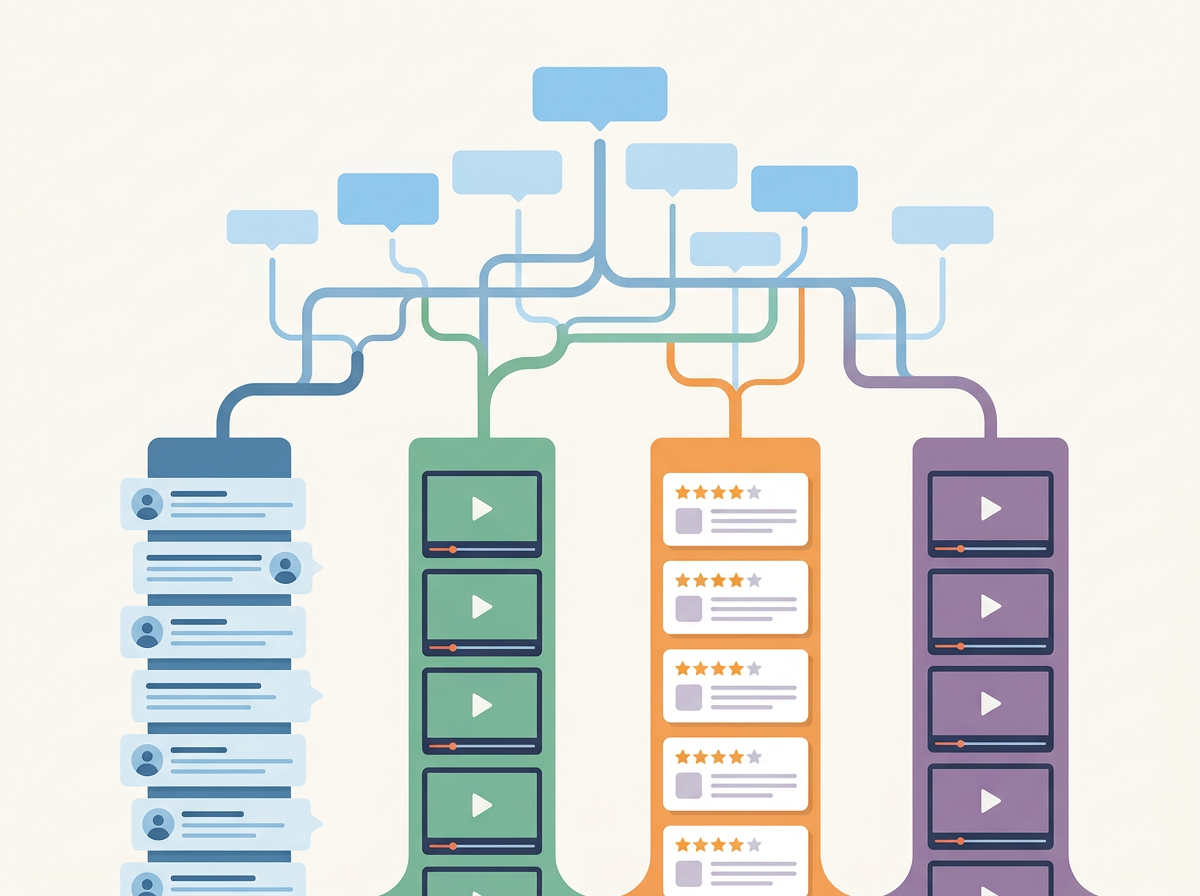
Check the sources behind the answers where you are missing. Assistants lean on specific domains, Reddit threads, YouTube videos and review pages, and those sources tell you where you need to appear. If a comparison site or a Reddit thread is cited in every answer for your category, your own blog post will not outweigh it.
This is the step most generic guides skip. They tell you to publish better content, but the winning move is often to get accurately represented on the pages already being cited. Two related reads:
- How to see which sites and Reddit threads AI cites for the research method.
- Reddit and YouTube in AI answers for earning a place there honestly, without astroturfing.
Citation analysis, like Citeflare's citation view, classifies these sources and shows each domain's share of citations so you can prioritise.
Step 4: Make your own pages easy to quote
Write pages so a model can lift a self-contained answer from them. Concretely:
- Use question-style headings that match how people ask.
- Open each section with a direct answer of one or two sentences that make sense when quoted alone, then add detail.
- State facts plainly: what you do, who it is for, pricing model, locations, integrations. Ambiguity makes a model skip you or guess.
- Add comparison tables where buyers weigh options, with honest trade-offs.
- Keep claims verifiable. Only publish numbers you can source.
- Refresh old pages when facts change, since stale details get repeated.
The structure in detail is covered in how to structure content so AI assistants cite it, and the evidence on formats in what content gets cited most by Perplexity and AI Overviews. The broader discipline is outlined in a practical guide to generative engine optimization.
Step 5: Can AI crawlers actually read my site?

Check your server logs and robots rules, because a brand that blocks or errors on AI bots cannot be fully read. Different bots serve different purposes: some collect training data, some fetch pages to answer a live search, and some act on behalf of a user. Blocking all of them by accident, or serving them errors, removes you from consideration.
Look for:
- Robots.txt rules or firewall settings that block GPTBot, ClaudeBot or PerplexityBot unintentionally.
- High error rates on your most-visited paths.
- Key content that depends on JavaScript to render.
More on what each bot does is in AI crawlers explained. Crawler analytics can log bot visits by purpose and show error rates per path, so you can see whether the pages you care about are being fetched at all.
Step 6: Build presence beyond your own site
Secure accurate, consistent mentions on third-party sources assistants trust. Typical places include category roundups, review platforms, industry publications, partner pages, podcasts and community discussions. The goal is the same description of your brand appearing in several independent places, not volume for its own sake.
Practical actions:
- Keep your profile facts identical across directories and review sites.
- Give journalists and reviewers clear, accurate product information.
- Take part in communities where your buyers ask questions, and disclose your affiliation.
- Correct outdated third-party listings.
Step 7: Close gaps on a schedule
Turn each gap into a task, ranked by how many buyer prompts it affects, and publish against it steadily. One well-targeted page that answers a missing question beats five generic posts. Teams that publish regularly can automate the pipeline: content agents draft from gaps and brand facts and let you review before publishing, and there is a guide to software that finds content gaps and publishes to WordPress. Always review drafts for accuracy before anything goes live.
Which tactics matter most? A quick comparison
| Tactic | Effort | What it influences | Best when |
|---|---|---|---|
| Rewrite pages with direct answers | Low | Whether your own pages get quoted | You already rank or have traffic |
| Fix crawler access | Low | Whether bots can read you at all | Logs show blocks or errors |
| Publish for gap prompts | Medium | Named-or-not on specific questions | Rivals appear and you don't |
| Earn third-party citations | High | Which sources answers trust | Cited sources are not your domain |
| Track share of voice | Ongoing | Knowing what works | Always |
If you can only do two things this week, fix crawler access and rewrite your top pages with direct answers. Then use citation data to decide where the heavier work goes.
Step 8: Track the trend, not the snapshot

Measure visibility score (the share of prompt runs that mention you) and share of voice against competitors weekly, and judge change over several weeks. Because answers vary between runs, a single day's result proves little. Reporting this to others is its own skill; see how to report AI search share of voice.
If you want a tool to do the tracking, comparisons are in best tools to track ChatGPT and Perplexity brand mentions. Citeflare combines tracking, citation analysis, crawler monitoring and publishing in one workspace; see pricing for plans, which start with a free trial.
How long does it take to see results?
Expect weeks, not days, and don't expect guarantees. Some engines read live web pages and can reflect changes quickly; others rely more on training data that updates slowly. That is why a steady tracking baseline matters: it shows whether movement is real.
FAQ
Is improving AI visibility the same as SEO?
No, though they overlap. Good content and technical health help both, but Google rankings do not predict whether an assistant names you. AI answers draw on a wider set of sources, so you need to track mentions directly.
Do I need to pay for a tool?
Not to start. You can test prompts by hand across assistants and log results in a spreadsheet. A tool becomes worth it when you track dozens of prompts daily, compare competitors, or manage several brands.
Which AI engines should I focus on?
Start with the ones your buyers use: typically ChatGPT, Google AI Overviews and AI Mode, Gemini and Perplexity, then add Claude and others. Check your own prompts on each, since results differ by engine.
Can I pay to be included in AI answers?
There is no reliable way to buy a place in an assistant's organic answer. What you can influence is the quality, clarity and spread of the information about your brand.
Is this only for big brands?
No. Smaller brands often win specific, narrow questions, such as a niche use case or location, where large competitors have thin content.
How often should I check?
Track daily if a tool allows it, and review weekly. Make decisions on multi-week trends rather than single runs.